



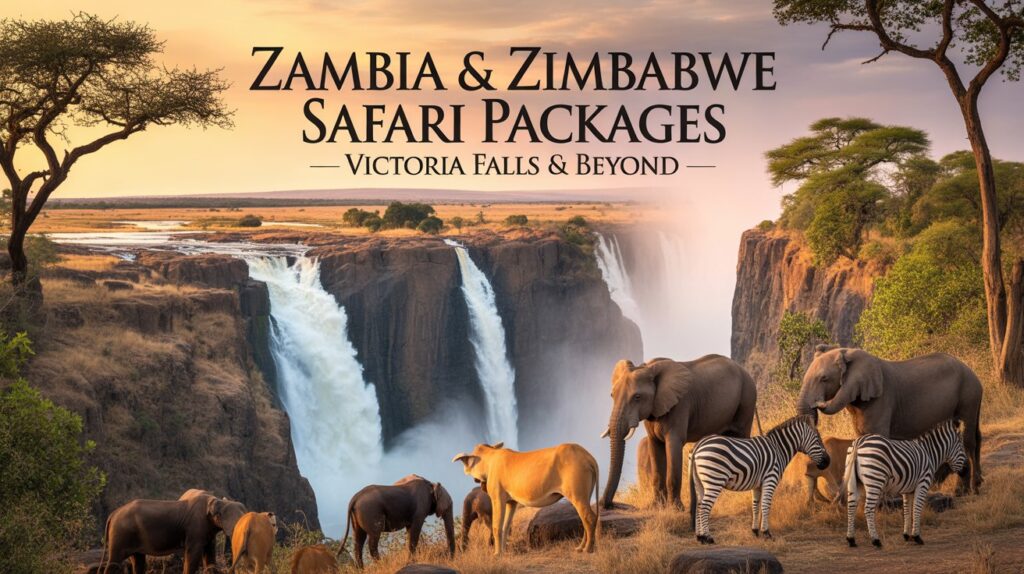
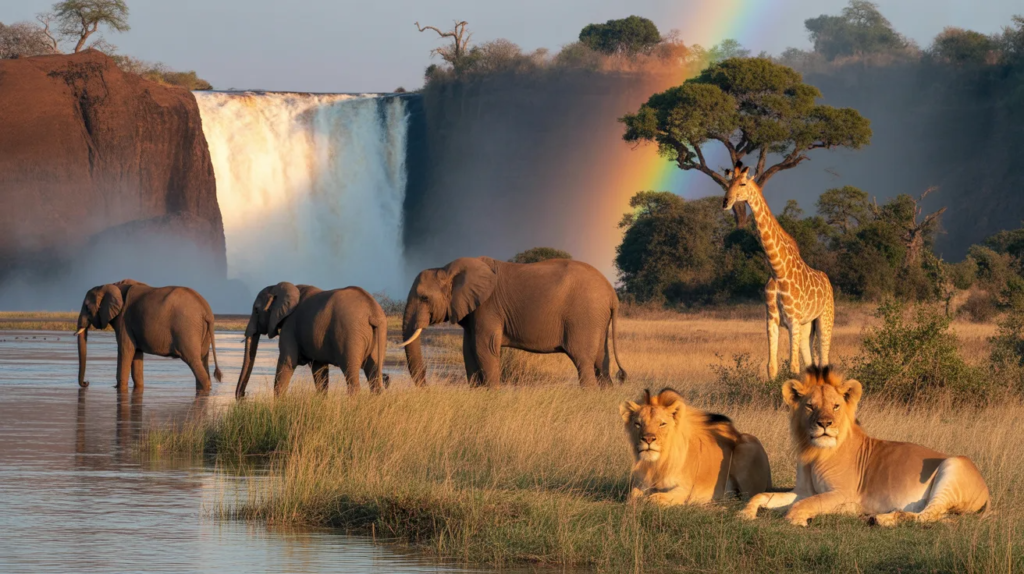
Victoria Falls is where most Southern Africa safaris begin — and for good reason. The mighty Zambezi River thunders over a cliff and plunges 400 feet to the valley floor below, creating one of the seven natural wonders of the world, with a gap spanning a full mile wide. But here’s what seasoned Africa travelers know that first-timers don’t: the falls are merely the opening act. The wild landscapes of Zambia and Zimbabwe that surround them — ancient floodplains, elephant-filled valleys, and remote bush camps — are what transform a holiday into a life-changing journey.
At Africa Wild Safaris, we’ve spent years crafting Zambia and Zimbabwe safari packages that honor both the spectacle of Victoria Falls and the untamed beauty that lies beyond. This guide gives you the complete picture — what to see, where to go, how to time your visit, and how to get the most from both sides of the Zambezi.
Also Read: Helicopter Ride Victoria Falls Zambia: Flight Guide
Why Combine Zambia and Zimbabwe on One Safari?
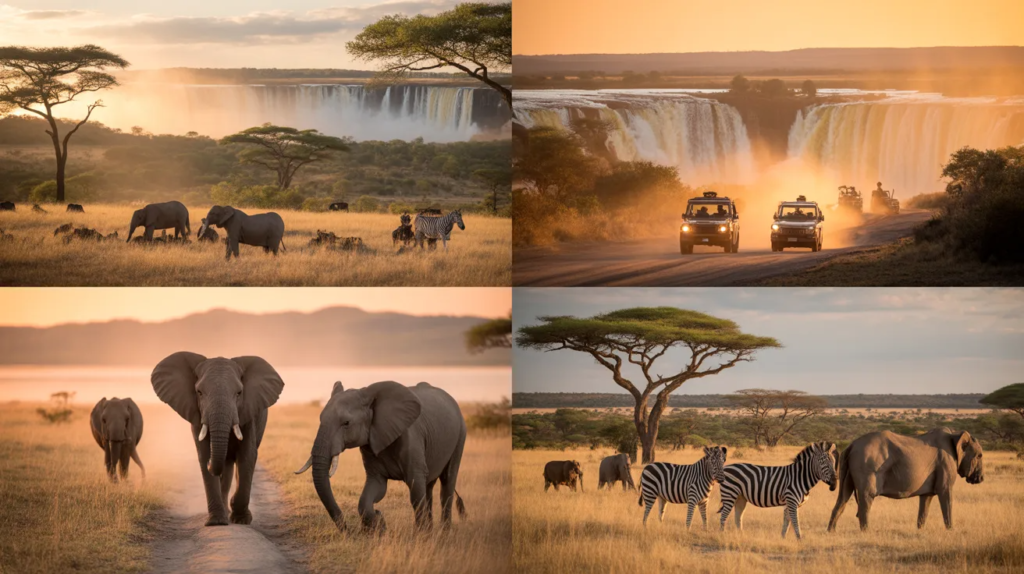
These two countries share the Zambezi River as a border, which means combining them on one itinerary is not just logical — it’s the smartest way to experience the region. Zimbabwe offers 75% of the viewing spots of Victoria Falls through actual rainforest paths, while Zambia gets you right up close to feel the spray. Each country adds a dimension that the other lacks.
Better still, crossing between them is seamless. The KAZA visa, available for around US$50, allows international visitors to travel freely between Zambia and Zimbabwe for 30 days , making multi-country itineraries both affordable and hassle-free.
Botswana, Zambia, and Zimbabwe each offer distinct safari characteristics: Botswana tends toward high-end exclusivity, Zambia leans into remote parks and water-based experiences, and Zimbabwe delivers diverse landscapes with a strong cultural dimension — often at more accessible price points. Many of our most popular itineraries weave through all three.
Victoria Falls: The Shared Crown Jewel
Known locally as “Mosi-oa-Tunya”, the Smoke That Thunders — Victoria Falls is a UNESCO World Heritage Site surrounded by lush rainforest, home to vibrant bird species and playful wildlife. Viewing it from both sides is far more rewarding than choosing one country over the other.
From the Zimbabwe side, you walk through Victoria Falls National Park and stop at several viewpoints directly facing the main curtain of water. The town of Victoria Falls itself is compact, safe, and well-served with accommodation, making it the most common base for multi-day packages.
From the Zambian side, at Livingstone, you can walk along the precipice of the bridge 100 meters above the gorge for a breathtaking view of the eastern cataract — just make sure to have a raincoat or be prepared to get soaked. The Zambia side also offers the legendary Devil’s Pool, where, during low water season (roughly September to November), the bravest swimmers can sit on the very lip of the falls.
The Flight of Angels — a helicopter flight over the falls — is one of the region’s defining experiences. Soaring over the spray, you take in the sheer expanse of this natural wonder while marveling at the far-reaching Zambezi River below. It’s the one activity we recommend to every guest, regardless of budget.
A lesser-known secret: Victoria Falls is the only place in Africa, and one of only a handful of places in the world, where lunar rainbows occur — a natural phenomenon formed by moonlight rather than sunlight, and something surprisingly few visitors know about. Timing your trip around the full moon between February and July creates a once-in-a-lifetime spectacle.
Beyond the Falls: Zimbabwe’s Wild Interior
Between the Zambezi and Limpopo rivers lie superb wildlife sanctuaries, ancient ruins, rugged escarpments, lakes, and vast floodplains teeming with game — safari country at its most soulful, diverse, authentic, and refreshingly uncrowded.
Hwange National Park is Zimbabwe’s flagship wilderness area, just two hours by road from Victoria Falls. The park covers 14,600 square kilometers and is home to over 400 bird species and Africa’s Big Five. During the dry months of July through October, massive elephant herds — sometimes in the hundreds — gather around the park’s artificial waterholes, creating some of the most dramatic wildlife concentrations anywhere on the continent. Zimbabwe’s wildlife viewing peaks during the dry season from July to October, when drier conditions at Victoria Falls also allow better views of the rock formations.
Mana Pools National Park, a UNESCO World Heritage Site, occupies a remote stretch of the Zambezi Valley in northern Zimbabwe. Famous for its canoeing safaris and extraordinary wildlife density, it sits directly across the river from Zambia’s Lower Zambezi National Park — meaning a combined itinerary covering both sides delivers one of Southern Africa’s greatest wilderness experiences.
Lake Kariba, one of the world’s largest man-made reservoirs, is perfect for houseboat safaris, tiger fishing, and sundowner cruises against a backdrop of drowned forests and Matusadona National Park’s shoreline game.
Beyond the Falls: Zambia’s Remote Wilderness
Zambia’s safari scene is defined by low tourist density, exceptional guiding, and experiences that simply aren’t available elsewhere in Africa.
South Luangwa National Park is the spiritual home of the walking safari. Known as the birthplace of walking safaris, it provides a close-up experience of the African bush and is especially rich in leopards, along with large populations of elephants and the rare Thornicroft’s giraffe. Walking through big game country on foot, guided by some of Africa’s most experienced naturalists, is a fundamentally different experience from any game drive — it engages all your senses and builds a connection with the landscape that passengers in a vehicle rarely achieve.
Lower Zambezi National Park is Zambia’s other great crown jewel, and one that regularly surprises first-time visitors. Founded in 1983 and covering 4,092 square kilometers along the northwestern bank of the Zambezi River, the park hosts elephant herds sometimes up to one hundred strong, hippos, leopards, lions, buffalo, and over 400 bird species.
What makes Lower Zambezi truly unique is the diversity of its safari activities. Guests can choose from traditional game drives, night drives, bush walks, canoe safaris, boat cruises, and catch-and-release tiger fishing excursions — or combinations of all of them. The canoe safari in particular is an experience Zambia has made its own. There is something timeless about gliding silently through these waterways — your guide at the front of the canoe, propelling you through narrow channels between thick reeds and papyrus, with silence except for slight burbles and gurgles as you pass hippos and elephants at the water’s edge. Horizon Guides
Kafue National Park, one of Africa’s largest protected areas, rewards adventurous travelers willing to go off the beaten path. The Busanga Plains within Kafue reach their peak viewing potential from July to October as floodwaters pull back, offering encounters with lions, cheetahs, red lechwe, and remarkable bird concentrations.
Best Time to Visit: Zambia & Zimbabwe Safari Packages
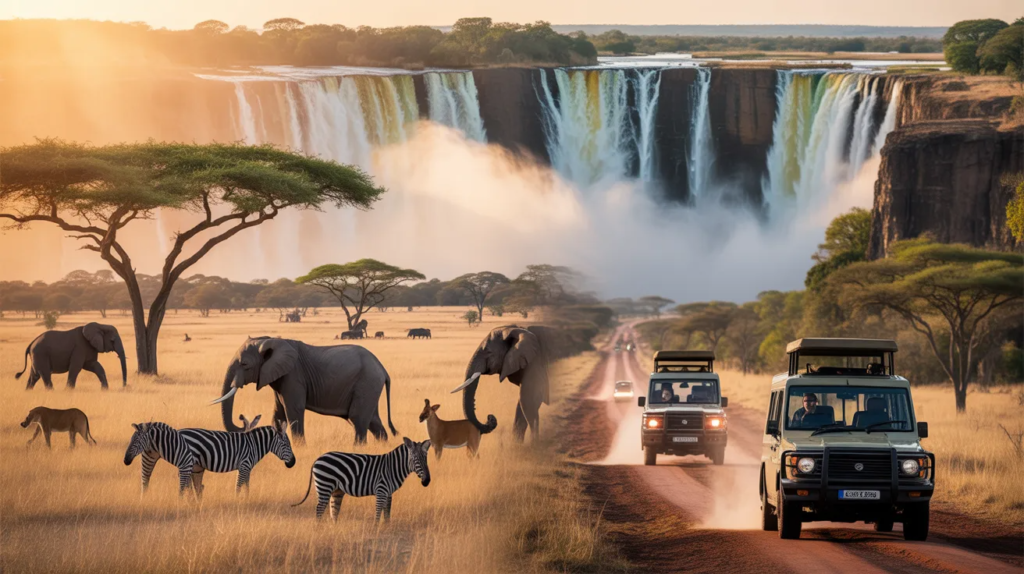
Getting your timing right is one of the most important decisions you’ll make. Here’s the expert breakdown:
March to May — Peak water season at Victoria Falls, when the Zambezi is in full flood, and the falls reach their most dramatic and powerful. April and May offer the most spectacular views. However, some bush roads become difficult in remote parks.
June to October — The dry season is prime safari time across both countries. Mild temperatures, virtually no rain, and a lower malaria risk make this the most popular window for Zimbabwe safaris. Wildlife concentrates around water sources, making game viewing far more predictable and rewarding. This is also when walking safaris are at their best, with drier vegetation making navigation easier.
September to November — The best time for white-water rafting on the Zambezi and for swimming in Devil’s Pool, as water volume and speed reduce in the low water season.Also ideal for tiger fishing in the Lower Zambezi.
December to February — The green season brings lush landscapes, newborn wildlife, excellent birding as migratory species arrive, and significantly lower lodge rates. A good option for budget-conscious travelers willing to trade peak game density for value.
Sample Itinerary: The Classic 7-Day Zambia & Zimbabwe Safari
Day 1–2: Victoria Falls (Zimbabwe side) Arrive at Victoria Falls Airport. Guided rainforest walk to the falls, sunset Zambezi cruise spotting hippos and crocodiles. Helicopter flight on day two.
Day 3: Cross to Livingstone, Zambia. Cross via the historic Victoria Falls Bridge using your KAZA visa. Explore the Livingstone Museum, stroll through local markets, and experience the Zambian side of the falls, including the Knife-Edge Bridge viewpoint.
Day 4–5: Lower Zambezi National Park. Fly or transfer to a riverside lodge within the park. Morning canoe safari, afternoon game drive, evening boat cruise. Night drives for nocturnal wildlife.
Day 6–7: Hwange National Park (Zimbabwe) Transfer to Hwange for big game — elephants, lions, wild dogs. Game drives at dawn and dusk, guided bush walks between waterholes. Depart from Victoria Falls Airport on day 7.
This is one framework. Our packages at Africa Wild Safaris are fully customizable — we can extend into South Luangwa, add a Chobe day trip from Botswana, or upgrade to luxury fly-in camps throughout.
Choosing the Right Package: Budget, Mid-Range & Luxury
Budget packages (from ~$150–$300 per person/night): Overland-style camping safaris travel by truck, stopping in Livingstone or Victoria Falls town, and combine activities like Zambezi canoe trips, cultural village tours, and game drives across Hwange and Chobe. Ideal for younger travelers and backpackers seeking authentic bush experiences without luxury price tags.
Mid-range packages ($300–$600 per person/night): Comfortable lodge accommodation, guided game drives in open 4×4 vehicles, all meals included, and a curated selection of activities. The sweet spot for most first-time visitors.
Luxury packages ($600+ per person/night): Top properties offer luxury tented suites with private decks, outdoor showers, panoramic views, and star beds — along with extras like helicopter transfers, Ra-Ikane river cruises, and high tea on the Zambezi banks. Lodges like Matetsi Victoria Falls, Thorntree River Lodge, and Sausage Tree Camp in Lower Zambezi set a standard that rivals anywhere in Africa.
Practical Travel Tips for Zambia & Zimbabwe Safari Packages
Visas: Most nationalities require visas for both countries. The KAZA UniVisa covers both Zambia and Zimbabwe for 30 days at a single US$50 fee — essential for any multi-country itinerary.
Health: Yellow fever vaccination is recommended. Malaria prophylaxis is advised for both countries; risk is lowest in the dry season. Consult a travel health clinic at least six weeks before departure.
Flights: Zimbabwe is well connected, with flights into Victoria Falls from Johannesburg, Cape Town, and through Ethiopian Airlines from Addis Ababa — useful for travelers combining an East African safari before heading south.
Packing: Neutral colors are essential for game drives. Tsetse flies are present in Zambia and are attracted to blue and black, so avoid packing those colors entirely. Lightweight layers work well as mornings and evenings in the bush can be surprisingly cool, even in summer.
Booking lead time: Reserve approximately 79 days ahead for multi-country safari packages, particularly for the peak June to October window when the best lodges fill fast.
Why Book Your Zambia & Zimbabwe Safari with Africa Wild Safaris?
At Africa Wild Safaris, our packages are built on firsthand knowledge of the region — not brochure descriptions. We’ve walked the paths at Mana Pools, paddled the Zambezi in Lower Zambezi, and stood at the edge of Victoria Falls in every season. We know which lodges deliver genuinely outstanding guiding, which parks are worth the journey, and how to piece together an itinerary that flows naturally between countries without wasted travel time.
Whether you’re planning a first safari or your tenth, a honeymoon escape or a family adventure, we’ll create a Zambia and Zimbabwe package that fits your pace, your budget, and your appetite for the wild.
Ready to start planning? Contact our team at Africa Wild Safaris to begin designing your Southern Africa safari today